01Two generations, one plant
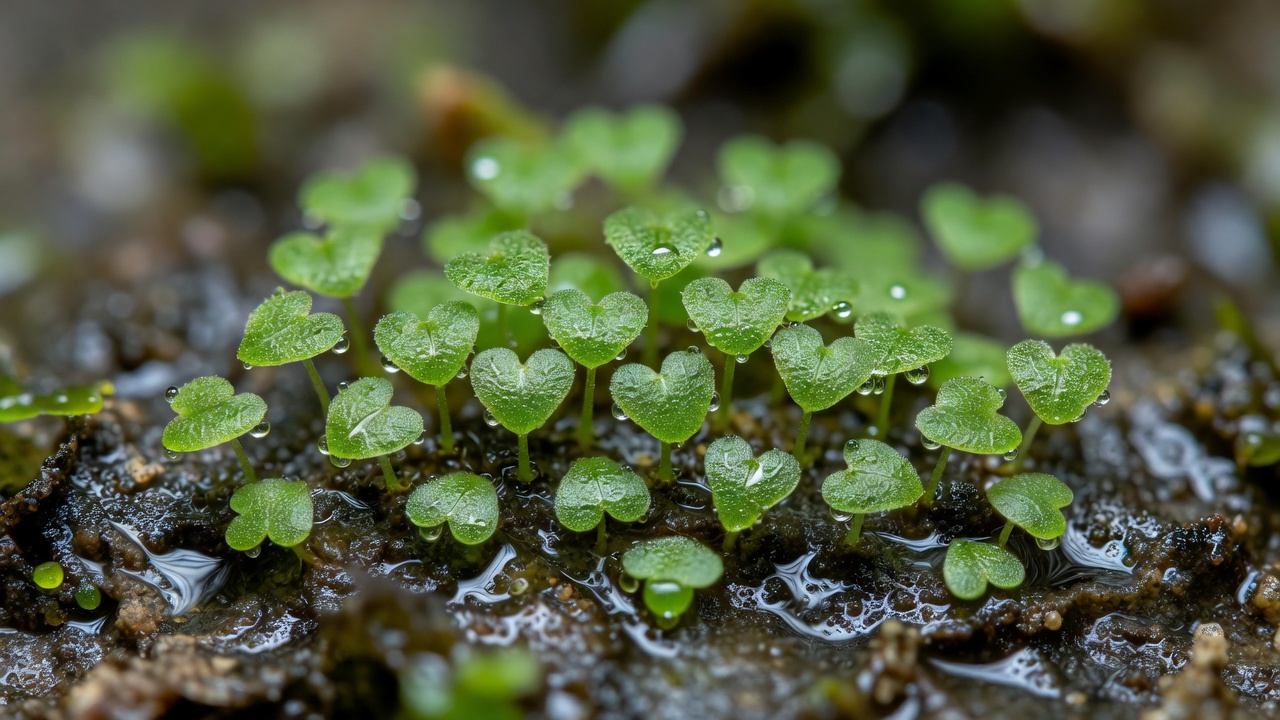
A fern lives as two separate organisms. The leafy plant you grow is the sporophyte. It sheds spores, each of which can grow into a tiny, free-living gametophyte — a heart-shaped green sheet called a prothallus, usually under a centimetre across. The prothallus carries the sex organs. Sperm swim through a film of water to reach the egg, and only then does a new sporophyte begin.
That swim is why sowing happens in a sealed, humid container, and why mould is the enemy. Spores are tiny, germination is slow and the surface stays wet for months: perfect conditions for fungi, algae and liverworts to outpace your ferns. Every step below is designed to tilt the race.
02The protocol
Check ripeness
Use a ×10 lens. Ripe sporangia are dark brown, plump and glossy. Pale green sori are immature; ragged, empty ones have already shed. Osmunda and Onoclea have green, short-lived spores — sow within a week.
Collect on paper
Cut a fertile pinna, fold it inside clean white paper and leave it somewhere still and dry for 24–48 hours. Spores fall as a fine brown, black or yellow dust.
Clean the spores
Tilt the paper and tap gently; the spores slide off while heavier chaff stays behind. Clean spores mean fewer fungal contaminants. Store in a labelled glassine envelope in the fridge if not sowing at once.
Sterilise the medium
Fill a lidded clear tub with fine, peat-free compost or sieved coir. Pour boiling water through it until saturated, close the lid and let it cool. Some growers microwave the moist medium for several minutes instead.
Sow thinly
Tap spores across the surface from a folded card. Thin is better: crowded prothalli stay small and rarely produce sporophytes. Close the lid immediately.
Light and warmth
Bright indirect light or LEDs on 12–16 hours, 18–22 °C. Do not open the tub. A green haze appears in two to six weeks.
Raise prothalli
At 4–12 weeks, heart shapes are visible. If crowded, transfer pea-sized clumps to a fresh sterile tub with tweezers that have been dipped in boiling water.
Mist to fertilise
When prothalli reach 5–8 mm, mist with cooled boiled water once a week. The water film lets sperm move between them.
Watch for sporophytes
The first tiny fronds rise from the notch of the heart, often after another one to three months.
Prick out and harden off
Move small clumps, not singles, into cell trays inside a propagator. Open the vents a little more each week over a month.
03Troubleshooting the tub
White fluff
Fungal mycelium. Remove the patch with a sterile spoon; if it spreads, resow. Next time, clean spores more carefully and cool the medium fully before sowing.
Slick green film
Algae, usually from non-sterile water or too much light. Reduce photoperiod and use only boiled water.
Prothalli, no fronds
Too crowded or too dry for fertilisation. Thin out and mist. Some genera are slow; wait before giving up.
04Exchanges and records
Spore is the most ethical way to acquire a rare fern: a single frond yields thousands of plants with no harm to the parent. The British Pteridological Society and the American Fern Society each run member spore exchanges. Label every tub with species, source, collection date and sowing date; a notebook entry for each sowing builds a record of what germinates, and when. Before swapping across borders, read our notes on permits and phytosanitary rules.
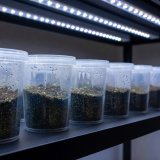
Fig. 4a — labelled sowing tubs, week 6