01A warning from the fern craze
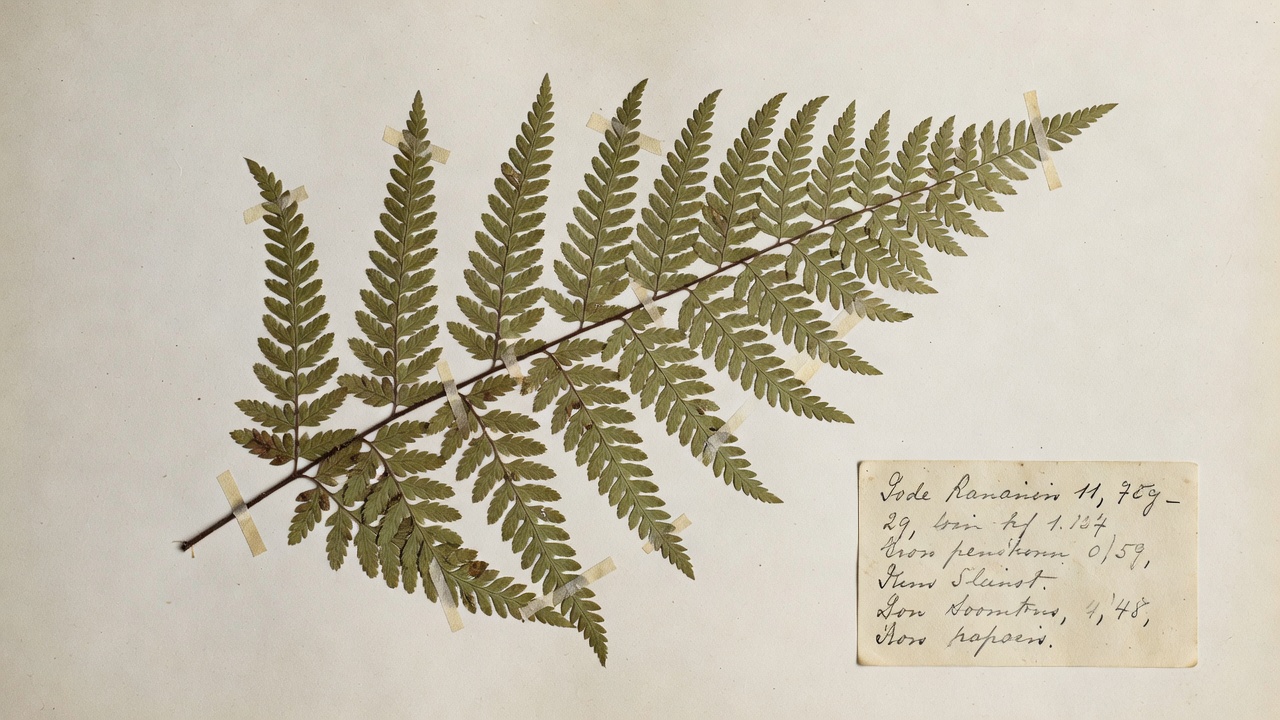
In 1855 the novelist Charles Kingsley gave the Victorian obsession a name: pteridomania. Fern hunters, dealers and day-trippers stripped valleys in Devon, Cornwall, the Lake District and Ireland. The Killarney fern, Vandenboschia speciosa, was dug almost to extinction in accessible sites; Sarah Whittingham's The Victorian Fern Craze traces how quickly it happened.
The pattern repeats today with social-media trends. When a variegated aroid or a velvet Begonia becomes fashionable, wild collection rises to meet demand. The collector's job is to buy in a way that does not reward it.
02CITES in plain terms
The Convention on International Trade in Endangered Species of Wild Fauna and Flora, in force since 1975, regulates cross-border trade through three appendices. Appendix I species are threatened with extinction and commercial trade in wild specimens is essentially banned. Appendix II species may be traded with export permits showing trade is not detrimental to survival. Appendix III lists species protected by an individual country that has asked for help.
Relevant listings for collectors include all tree ferns of the family Cyatheaceae (Appendix II), the genus Nepenthes (Appendix II, with N. rajah and N. khasiana on Appendix I), and most orchids. Artificially propagated plants often move under simpler rules, but the paperwork must still exist. In the UK, CITES is administered by the Animal and Plant Health Agency (APHA); in the EU, by each member state's management authority.
Tree fern trunks of Dicksonia antarctica from Tasmania are harvested from forestry operations and sold with a state-issued tag. A trunk without a tag is a reason to walk away.
03Laws beyond CITES
The Nagoya Protocol (2010) under the Convention on Biological Diversity requires consent and benefit-sharing when genetic resources leave their country of origin; it shapes how botanic gardens and breeders exchange material. At home, the UK's Wildlife and Countryside Act 1981 makes it an offence to uproot any wild plant without the landowner's permission, and Schedule 8 species carry stricter protection. Plant health rules matter too: since 2021, most plants imported into Great Britain need a phytosanitary certificate, and passport rules govern movement within the country.
04Questions to ask a seller
How was this plant produced?
Spore-raised, divided, tissue-cultured or collected? Honest nurseries answer immediately.
Where did the parent stock come from?
A named nursery, botanic garden exchange or documented legal collection is acceptable; "imported from a supplier" is not an answer.
Is there paperwork?
For listed species, ask for the CITES permit number or confirmation of artificial propagation, plus a phytosanitary certificate for imports.
Does the plant look grown?
Wild-collected plants often show damaged roots, foreign substrate, epiphytic lichens or irregular sizes. Nursery stock tends to be uniform.
Does the price make sense?
A mature specimen of a slow species sold cheaply has almost certainly been taken from the wild.
05Better routes to rarity
Spore exchanges
Society exchanges provide hundreds of species each year. See sowing spores.
Plant society sales
Local fern and begonia groups trade divisions with full histories.
Specialist nurseries
Search the RHS Plant Finder for stockists and ask the questions above before you order.